


Blog
The story of our beginnings

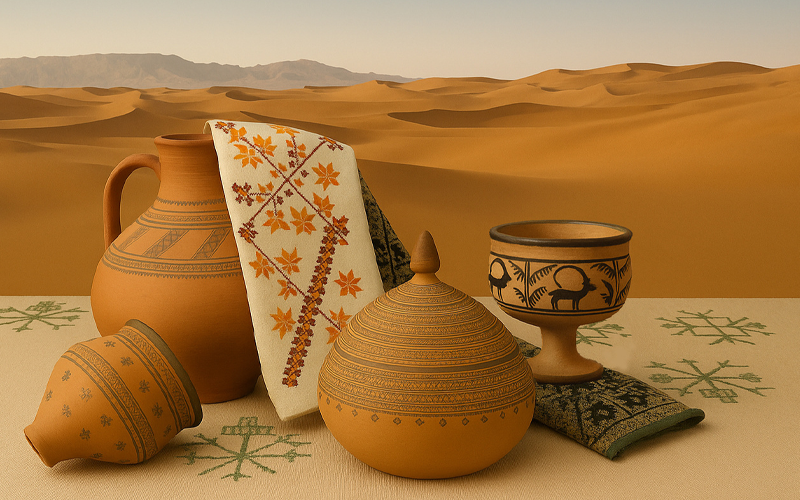
From the heart of the soil to the light; the birth of the dawn
The story of “Rojna” began with a concern; a human, social, and cultural concern. We had heard about the long-term droughts in Sistan and Baluchestan, about the cracked lands, the abandoned villages, the dead livestock, and the people who no longer had anything to fight nature with. But where to hear and where to see…
We had the opportunity to travel to Sistan, a trip that changed our lives forever.
When we entered this land, we saw with our own eyes that Sistan is no longer the lush land of Shahnameh; it no longer has abundant water, nor do fragrant winds pass through the reeds. Today, the winds that once brought coolness and life blow hot, burning sand into the faces of the people. The land is dry and barren; the houses are half-buried in the dirt; the people’s eyes, however, still wait for a glimmer of hope.
We spoke to men who had been cattle ranchers for years, and now only the memory of their herds remains. We met women whose children suffer from respiratory diseases and who throw kilos of sand out of their homes every day. We met children for whom playing in the sand is no longer a game, but the only pastime on days without school and fun.
All this pain, all this suffering, led us to one question:
“What can we do?”
But in the heart of this parched soil, seeds of hope were still alive. As we approached the homes and hearts of the people, we found hidden treasures; treasures not in the heart of the soil, but in the hands of women. A delicate, rooted, colorful, and meaningful art: Baloch embroidery .
We saw many women who, with stunning skill, stitched designs of culture, history, and nature onto fabrics. Every stitch had a story; every thread, a narrative of living in the midst of hardship. But often these extraordinary works either remained in a corner of the house or were sold for a small price, unseen.
It was at that moment that an idea sparked in our minds:
What if we could be a bridge between this indigenous art and global markets?
Drawing on our education in management and entrepreneurship in the United States, and our experience working with local communities, we decided to design a social business model that would not only provide sustainable income for women in the region, but also restore self-esteem, independence, and hope.
We did a lot of research, met with natural resource experts, archaeologists, community activists, development managers, and local women themselves. Sample products were produced, sales channels were explored, and slowly our vision took shape.
And finally, we named our brand: Rojna,
a Balochi word meaning “light”; a symbol of the light that can shine in the heart of darkness.
Rooted in history and culture, wings in innovation
Sistan is not just a geographical region. This land is one of the oldest human habitats on the Iranian plateau. In its heart lies an ancient city called the Burnt City , where not only have signs of the world’s first brain surgery been seen, but the world’s oldest moving image has also emerged from its pottery – a depiction of a goat jumping towards a tree, which, when placed together, creates a kind of primitive animation.
Along with this ancient civilization, Sistan also has an epic place in Ferdowsi’s Shahnameh . The mythical land of “Sam Nariman”, “Zal”, and the legendary Iranian hero, Rostam , was born in this soil. In Shahnameh, Zabolistan is the birthplace of courage and the guardian of the borders of Iran; and its destruction is equivalent to the destruction of the roots.
But today, Sistan, with all its historical and cultural grandeur, is embroiled in a humanitarian crisis. Years of mismanagement of water resources, drying up of the Hamun River, reduced rainfall, and lack of proper infrastructure have caused a large portion of the region’s people to lose their livelihoods and be forced to migrate.
But we believe that just as Sistan has stood and risen again many times throughout history, it can rise again today — if it relies on its roots, and, along with that, uses the tools of the modern world.
Rozhena’s Mission: Empowerment with Respect for Identity
At Rozhena, we are not just a handmade brand. We are a human-cultural movement . A movement to empower local women and girls, preserve authentic arts, and create value from the roots.
We respect the Baloch embroidery style rather than changing it. Our product designs are based on the same traditional styles, but with the guidance and training we provide to the artists, we try to connect them to the needs and tastes of the global market.
From handbags to coats, from cushions and tablecloths to fabric ornaments — every piece that comes out of Rožena’s small workshops is the result of hours of love, care, and storytelling. And every time these pieces find their way into a home somewhere in the world, they carry a message:
This art is alive.
This woman is capable.
This land still has hope.
A light for today, a beacon for tomorrow.
At Rozhena, we don’t just think about today. Our vision is to build a future where no woman is forced to abandon her art because of poverty; no girl gives up on her dreams because of lack of opportunities; and no region is forgotten simply because of its remoteness.
We want Rozhna to become a symbol of light and regeneration — not just for Sistan, but for every part of Iran and the world that needs a second chance.
The end of a beginning
For us, Rozhna is not just a project; it is the result of a journey that began with empathy, continued with deeper understanding, and came to life with the companionship of the courageous women of this land.
We are proud that Rozhna is not only our story, but the story of hundreds of Iranian women and girls — a story that continues every day, with every stitch, every thread, and every smile…